Resources · Books · Trading
Best Trading Books for Beginners and Serious Traders (2026)
Trading books split into two types: the ones that promise a system and the ones that quietly explain why most systems fail. The list below leans heavily toward the second kind — psychology, risk management, and the unglamorous craft of staying in the game long enough for an edge to play out. We've added a small set of pure technical and options references for the parts of the discipline that are best learned from a single, rigorous source. If you've never opened a trading book before, start with Trading in the Zone for mindset and Reminiscences of a Stock Operator for context — they cost less than a single ill-managed trade and will pay back many multiples over a career.
Books in this list
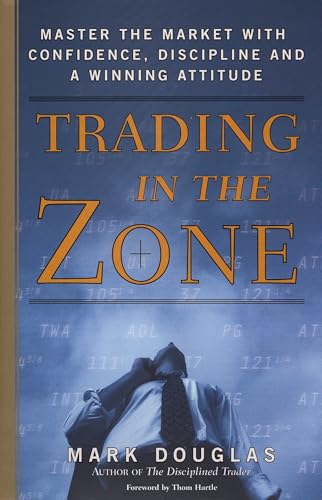 1
1Mark Douglas · 2000
Trading in the Zone
The psychology book every consistently profitable trader recommends.
Douglas reframes trading as a game of probabilities, not predictions, and walks through the mental shifts required to execute an edge mechanically — even after a losing streak.
- Who should read it
- Traders who *know what to do* but keep finding reasons not to do it.
- Key takeaway
- Anything can happen on any single trade. Edge plays out across hundreds of trades — your job is to keep showing up exactly the same way.
Affiliate link — buying through it supports Jarviix at no extra cost to you.
 2
2Mark Douglas · 1990
The Disciplined Trader
The prequel to Trading in the Zone — first principles of trader psychology.
Douglas's earlier work on building consistent trading behaviour — narrower than Trading in the Zone but with more concrete exercises for fixing self-sabotage patterns.
- Who should read it
- Traders who finished Trading in the Zone and want a more practical follow-up.
- Key takeaway
- Discipline isn't a personality trait — it's a learned response to recurring market situations. You build it on purpose.
Affiliate link — buying through it supports Jarviix at no extra cost to you.
 3
3Edwin Lefèvre · 1923
Reminiscences of a Stock Operator
The lightly-fictionalised diary of Jesse Livermore.
A century old and still the most quoted trading book in existence. Stories of crowd behaviour, manias, ruin and recovery that read like they were written last week.
- Who should read it
- Every trader who thinks the market has fundamentally changed in their lifetime.
- Key takeaway
- There is nothing new on Wall Street — the market changes its costume but not its psychology.
Affiliate link — buying through it supports Jarviix at no extra cost to you.
 4
4Jack D. Schwager · 1989
Market Wizards
Long-form interviews with the best traders of a generation.
Schwager interviews legendary traders across futures, equities, currencies and macro — and the patterns that emerge across radically different styles are worth more than any single 'system'.
- Who should read it
- Traders looking for the underlying habits — not the indicators — that separate survivors from blow-ups.
- Key takeaway
- There is no single winning style. Every great trader fits a strategy to their personality, then sticks with it through fire.
Affiliate link — buying through it supports Jarviix at no extra cost to you.
 5
5Alexander Elder · 2014
The New Trading for a Living
The updated edition of one of the all-time best 'whole craft' trading books.
Elder covers the three M's — Mind, Method, Money — across psychology, technical analysis and risk management. The closest thing to a one-volume curriculum for full-time trading.
- Who should read it
- New and intermediate traders looking for one comprehensive textbook.
- Key takeaway
- You don't trade markets — you trade your beliefs about markets. Fix the beliefs, the trades follow.
Affiliate link — buying through it supports Jarviix at no extra cost to you.
 6
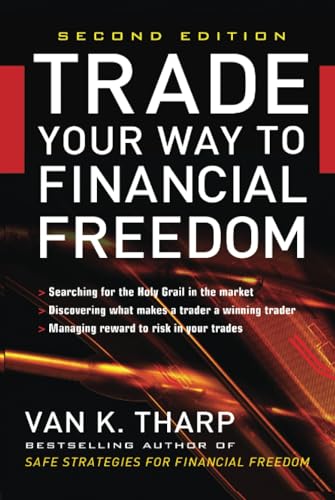
6Van K. Tharp · 2006
Trade Your Way to Financial Freedom
The R-multiple and position-sizing book every serious trader cites.
Tharp builds an entire trading framework around expectancy, R-multiples and position sizing — the parts of trading that actually decide long-term P&L, not the entry signal that retail courses obsess over.
- Who should read it
- Any trader who has 'a strategy' but no formal expectancy or position-sizing rules.
- Key takeaway
- It's not whether you're right that matters — it's how much you make when you're right vs how much you lose when you're wrong.
Affiliate link — buying through it supports Jarviix at no extra cost to you.
 7
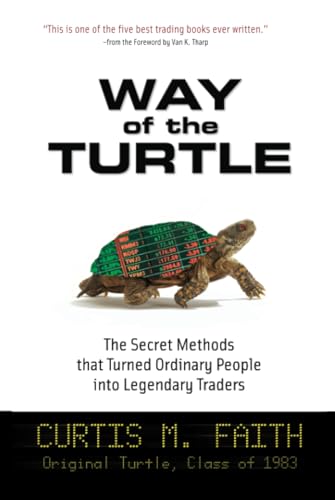
7Curtis M. Faith · 2007
Way of the Turtle
The original Turtle Trader experiment, told from the inside.
Faith — one of Richard Dennis's original Turtles — explains the system, the psychology that broke half the participants, and why even a documented edge is worthless without the discipline to follow it.
- Who should read it
- Systematic and trend-following traders, plus anyone who thinks 'a system' alone is enough.
- Key takeaway
- The edge wasn't the rules — the edge was the discipline to follow the rules across the trades that didn't feel right.
Affiliate link — buying through it supports Jarviix at no extra cost to you.
 8
8Michael W. Covel · 2017
Trend Following
The case for trend following, illustrated by the people who run it.
Covel profiles the great trend-following CTAs — Dunn, Eckhardt, the Turtles — and lays out the philosophy of buying strength and selling weakness, plus why most retail traders never get it to work on themselves.
- Who should read it
- Traders curious about systematic trend-following as a long-term approach.
- Key takeaway
- Cut losses fast, ride winners ruthlessly, ignore predictions — repeat for decades. That's the entire edge.
Affiliate link — buying through it supports Jarviix at no extra cost to you.
 9
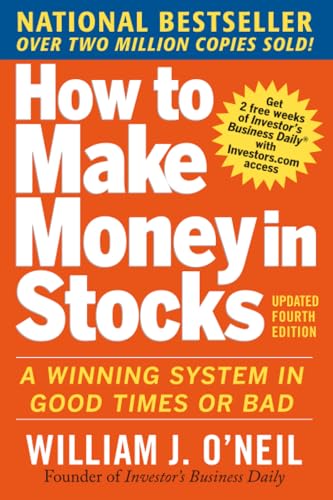
9William J. O'Neil · 1988
How to Make Money in Stocks
The CAN SLIM growth-momentum playbook.
O'Neil's CAN SLIM framework blends fundamentals, technicals and money management into a rules-based growth-stock approach used by countless modern traders.
- Who should read it
- Traders looking for a complete, rules-based growth-stock system.
- Key takeaway
- Cut losses fast, ride winners, and only buy from the side of strength — not weakness pretending to be value.
Affiliate link — buying through it supports Jarviix at no extra cost to you.
 10
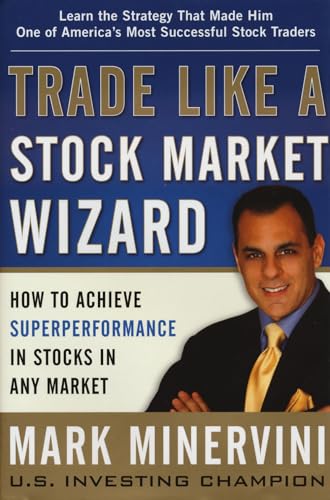
10Mark Minervini · 2013
Trade Like a Stock Market Wizard
A two-time U.S. Investing Champion's complete trend-following framework.
Minervini's SEPA methodology — Specific Entry Point Analysis — combines technical structure, earnings momentum and disciplined risk control into one coherent process.
- Who should read it
- Discretionary growth-stock traders who want a complete, opinionated process to study.
- Key takeaway
- Risk management isn't part of the system — it *is* the system. Everything else is decoration.
Affiliate link — buying through it supports Jarviix at no extra cost to you.
 11
11John F. Carter · 2019
Mastering the Trade
A practitioner's playbook for futures, options and intraday setups.
Carter shares the specific high-probability setups he uses across futures and options markets — opening drives, anti-climax reversals, scaling tactics — plus the psychology and risk discipline that keeps it sustainable.
- Who should read it
- Active intraday and short-term traders who want documented, repeatable setups.
- Key takeaway
- Trade fewer, better setups with bigger size — and respect the time-of-day structure that quietly drives most markets.
Affiliate link — buying through it supports Jarviix at no extra cost to you.
 12
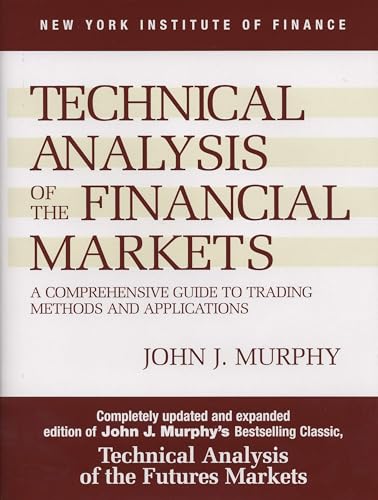
12John J. Murphy · 1999
Technical Analysis of the Financial Markets
The reference encyclopedia for chart-based traders.
If a chart pattern, indicator or intermarket relationship has been documented, it lives in this book. Long, but the closest thing to a complete TA reference for serious self-study.
- Who should read it
- Traders building a chart-based framework who want a single, dense reference.
- Key takeaway
- Technical analysis isn't a crystal ball — it's a structured way to align your bets with prevailing flow.
Affiliate link — buying through it supports Jarviix at no extra cost to you.
 13
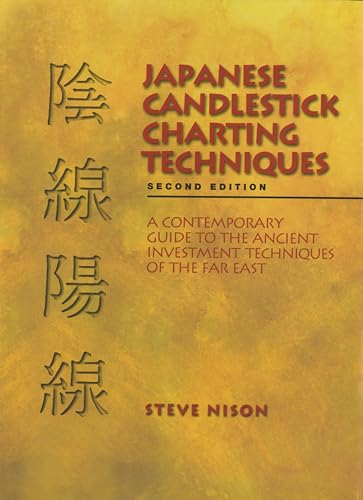
13Steve Nison · 1991
Japanese Candlestick Charting Techniques
The Western introduction to centuries-old Japanese chart reading.
Nison brought candlestick charting to the West and remains its most rigorous documenter. Catalogues every meaningful pattern with statistical context.
- Who should read it
- Discretionary traders who want a deeper vocabulary for reading short-term price action.
- Key takeaway
- Candles aren't magic — they compress information about who blinked first inside a session.
Affiliate link — buying through it supports Jarviix at no extra cost to you.
 14
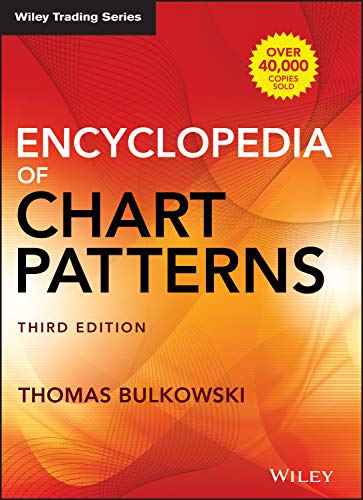
14Thomas N. Bulkowski · 2021
Encyclopedia of Chart Patterns
Statistical edge measurements for every chart pattern, in one volume.
Bulkowski tests every standard chart pattern across thousands of historical instances and reports the actual hit rate, average move and failure rate. Replaces TA folklore with statistics.
- Who should read it
- Discretionary chart traders who want to know which patterns are worth waiting for.
- Key takeaway
- Most chart patterns work — barely. The edge is in selecting the few that work meaningfully and ignoring the rest.
Affiliate link — buying through it supports Jarviix at no extra cost to you.
 15
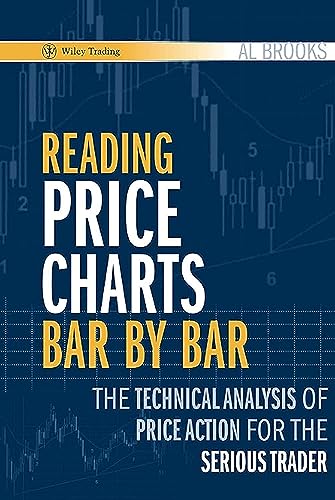
15Al Brooks · 2009
Reading Price Charts Bar by Bar
The price-action bible for discretionary intraday traders.
Brooks reads price charts at the bar level — not patterns, but the meaning of every bar's structure relative to the last few — and builds a complete framework for trading what is, not what should be.
- Who should read it
- Discretionary intraday traders willing to invest serious time in deep price-action study.
- Key takeaway
- Every bar is a vote on who's in control. Reading those votes in real time is a genuine edge — but only after thousands of hours.
Affiliate link — buying through it supports Jarviix at no extra cost to you.
 16
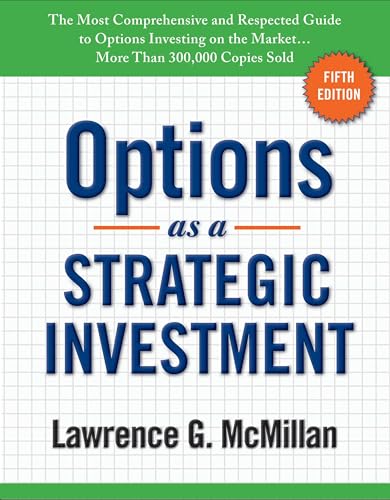
16Lawrence G. McMillan · 1980
Options as a Strategic Investment
The encyclopedic options reference, used by retail and pros alike.
Walks through every standard options strategy — covered calls, spreads, condors, calendars, ratio writes — with the math, the risk graphs and the edge cases that retail courses skip.
- Who should read it
- Anyone trading options seriously beyond covered calls.
- Key takeaway
- Options are not a leverage shortcut — they're a precision tool for shaping a payoff curve.
Affiliate link — buying through it supports Jarviix at no extra cost to you.
 17
17Guy Cohen · 2016
The Bible of Options Strategies
A pictorial reference of every standard options structure.
Catalogues 60+ options strategies with payoff diagrams, ideal market conditions, max profit/loss and Greeks behaviour. The reference you keep open when you're constructing a trade.
- Who should read it
- Options traders who want a quick visual lookup instead of a textbook re-read.
- Key takeaway
- Every options trade is a bet on direction, magnitude, time and volatility — pick a structure that bets on only the variables you actually have a view on.
Affiliate link — buying through it supports Jarviix at no extra cost to you.
 18
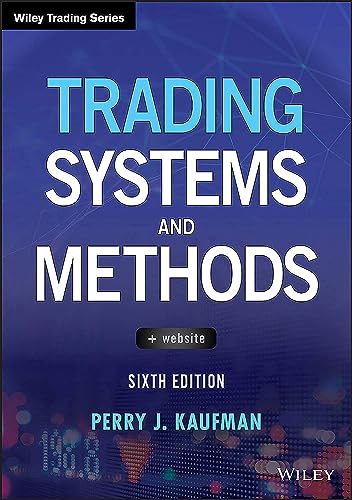
18Perry J. Kaufman · 2020
Trading Systems and Methods
The reference encyclopedia for systematic and quantitative traders.
Kaufman's 1,200-page reference covers nearly every documented systematic strategy — trend, mean reversion, breakout, seasonal, intermarket — with the math, code intuition and risk frameworks for each.
- Who should read it
- Systematic traders and quants building or auditing rule-based strategies.
- Key takeaway
- There are only a handful of structural edges (trend, reversion, carry, seasonality) — every 'new' system is a re-skin of one of them.
Affiliate link — buying through it supports Jarviix at no extra cost to you.
 19
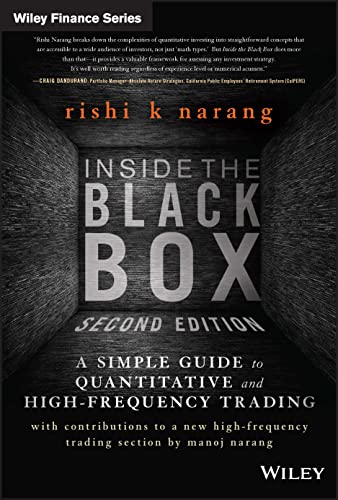
19Rishi K. Narang · 2013
Inside the Black Box
How quant funds actually make money — minus the marketing.
Narang strips quant funds down to their building blocks — alpha model, risk model, transaction cost model, portfolio construction, execution — and explains how each component contributes to (or destroys) returns.
- Who should read it
- Engineers, allocators and curious traders who want to understand quant funds without getting a PhD.
- Key takeaway
- There is no 'black box'. Every quant strategy is a transparent assembly of well-known components — the edge is in execution, not mystery.
Affiliate link — buying through it supports Jarviix at no extra cost to you.
 20
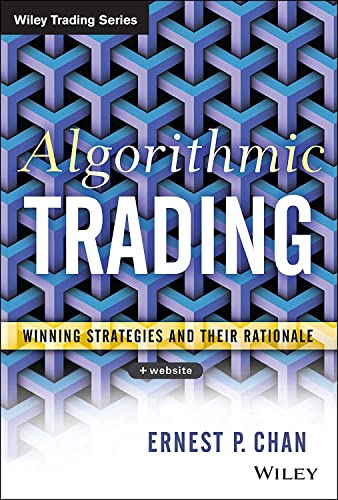
20Ernie Chan · 2013
Algorithmic Trading: Winning Strategies and Their Rationale
Practical, codeable algo strategies with worked examples.
Chan walks through mean-reversion and momentum strategies in pairs trading, ETFs and futures with MATLAB code, statistical justification and honest discussion of why each works and where it breaks.
- Who should read it
- Quant developers and serious systematic traders building their own infrastructure.
- Key takeaway
- Most algo edges are small, fragile and decay over time — survival comes from a portfolio of edges, not betting on one.
Affiliate link — buying through it supports Jarviix at no extra cost to you.
 21
21Nassim Nicholas Taleb · 2001
Fooled by Randomness
The book that made traders think hard about luck vs skill.
Taleb's first big book — the one that introduced 'survivorship bias', 'silent evidence' and the difference between an investing process and an investing outcome to a generation of traders.
- Who should read it
- Anyone working in markets who has ever attributed a great year to skill.
- Key takeaway
- A good year proves nothing. Process beats outcome — and most of what looks like skill is luck wearing a suit.
Affiliate link — buying through it supports Jarviix at no extra cost to you.
 22
22Nassim Nicholas Taleb · 2007
The Black Swan
The rare event that breaks the model — and the model-builders who keep ignoring it.
Taleb's argument that the most consequential events in markets, history and life are unpredictable, high-impact and rationalised after the fact. The intellectual underpinning of modern tail-risk thinking.
- Who should read it
- Risk managers, allocators and anyone who builds models for a living.
- Key takeaway
- Don't try to predict tail events — design portfolios that can survive (or even benefit from) them showing up.
Affiliate link — buying through it supports Jarviix at no extra cost to you.
 23
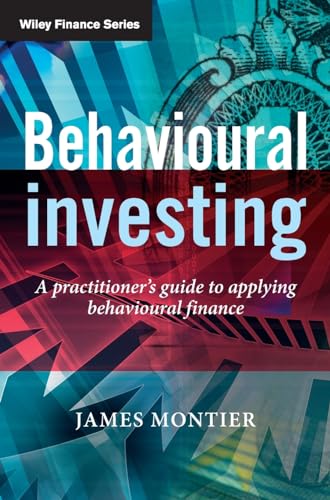
23James Montier · 2007
Behavioural Investing
30+ short essays on the cognitive biases that wreck portfolios.
Montier turns the academic behavioural-finance literature into practical, opinionated essays for investors and traders. Funny, blunt and unusually quotable for a finance book.
- Who should read it
- Anyone who has ever sold the bottom or chased the top — i.e., everyone in markets.
- Key takeaway
- You are the biggest source of risk in your own portfolio. Build process scaffolding to protect yourself from yourself.
Affiliate link — buying through it supports Jarviix at no extra cost to you.
 24
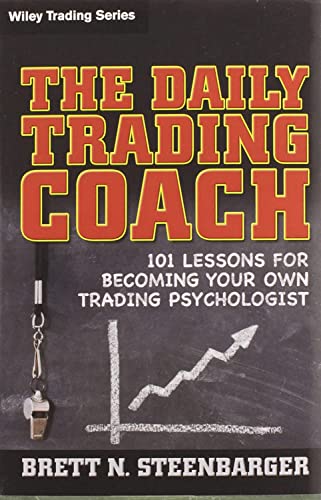
24Brett N. Steenbarger · 2009
The Daily Trading Coach
101 short performance lessons from a trader-psychologist.
Steenbarger's 101 self-coaching exercises — built from years working with hedge fund traders — for diagnosing, journaling and changing the behaviours that quietly cost you money.
- Who should read it
- Traders ready to do the unglamorous performance work most of the field skips.
- Key takeaway
- You can't fix what you don't measure. Trader development is a journaling discipline before it's a charting discipline.
Affiliate link — buying through it supports Jarviix at no extra cost to you.
Pair the books with the work
Risk-first trading writing and simulators — pair the books above with deliberate practice on Monte Carlo, drawdown and worst-case tools.
More reading lists
Finance · Books
27 curated picks
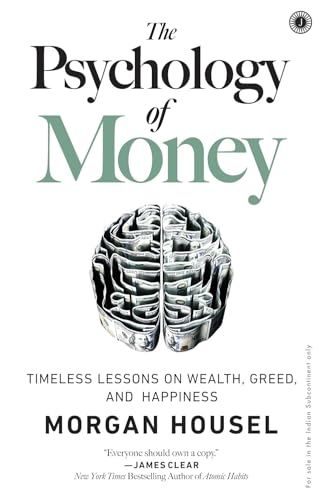

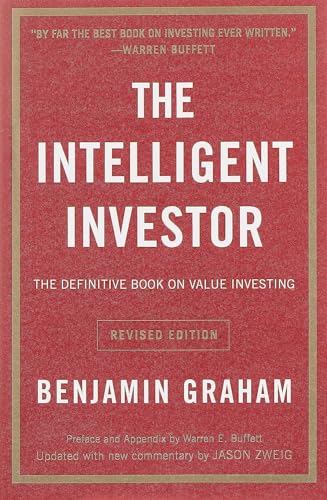
Best Investing Books for Beginners and Long-Term Investors
A curated reading list of the best investing books for beginners and long-term investors — Graham, Bogle, Lynch, Housel and more, with clear takeaways for each.
Open reading listFinance · Books
16 curated picks


Best Personal Finance Books for Indians
Curated reading list of the best personal-finance books — Indian and global — covering budgeting, debt, automation, behaviour and the road to financial independence.
Open reading listTech · Books
10 curated picks
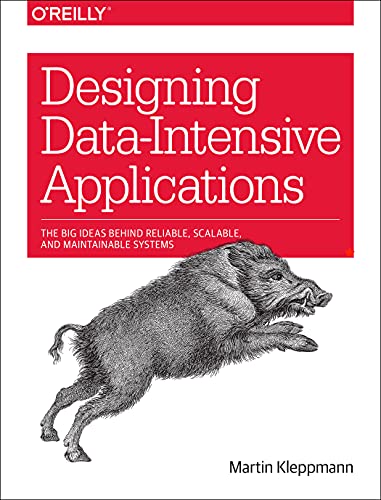


Best System Design Books for Backend Engineers
The system-design books we recommend to backend engineers and interview candidates — DDIA, Building Microservices, Database Internals, SRE, and more.
Open reading list