Resources · Books · Personal Finance
Best Personal Finance Books for Indians (2026)
Personal finance isn't a math problem — it's a behaviour problem. The books below are the ones that have actually changed how readers earn, spend, save and invest, instead of just describing it. Every entry is paired with a one-line takeaway and a 'who should read it' note so you can pick the right starting point in 30 seconds. We mix India-specific guides (Let's Talk Money, You Can Be Rich Too) with the global classics (Rich Dad Poor Dad, The Psychology of Money, The Total Money Makeover, Atomic Habits) so the list works whether you're setting up your first emergency fund or fine-tuning a 20-year FIRE plan. If you only have time for two of them, start with The Psychology of Money for the temperament and Let's Talk Money for the Indian playbook — between them, you'll have most of the framework you'll need for life.
Books in this list
 1
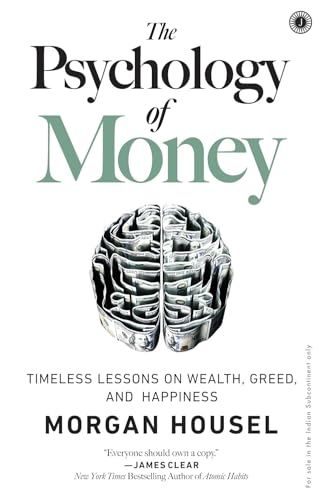
1Morgan Housel · 2020
The Psychology of Money
Why behaviour beats spreadsheets, in 19 short essays.
Housel argues that doing well with money has little to do with intelligence and everything to do with behaviour — and proves it with stories about luck, greed, time, and how compounding hides in plain sight.
- Who should read it
- Every investor or saver — from total beginners to experienced PMs who keep blowing up their personal portfolio.
- Key takeaway
- Reasonable beats rational. A strategy you can stick with for decades will out-earn the optimal one you abandon in a drawdown.
Affiliate link — buying through it supports Jarviix at no extra cost to you.
 2
2Monika Halan · 2018
Let's Talk Money
An Indian's complete personal-finance setup, end to end.
Halan walks an Indian household from emergency fund to insurance to investing to estate planning — opinionated, practical, and free of product jargon.
- Who should read it
- Anyone in India who wants a complete, honest checklist for setting up their money once.
- Key takeaway
- Build the boring backbone first — emergency fund, term insurance, health insurance — *then* worry about returns.
Affiliate link — buying through it supports Jarviix at no extra cost to you.
 3
3P.V. Subramanyam, M. Pattabiraman · 2017
You Can Be Rich Too
An Indian-context, goal-based personal-finance handbook.
Subra and Pattu walk Indian readers through goal-based investing — define the goal, work backward to a SIP, hold through volatility — and explain insurance, taxes and asset allocation in clean Indian numbers.
- Who should read it
- Indian salaried professionals planning for specific life goals (kids, retirement, home).
- Key takeaway
- Investing without a goal is gambling with extra steps. Define the goal first — then the SIP becomes obvious.
Affiliate link — buying through it supports Jarviix at no extra cost to you.
 4
4Robert T. Kiyosaki · 1997
Rich Dad Poor Dad
The book that put financial literacy on the bestseller list.
Kiyosaki contrasts the money lessons from his 'two dads' to argue that the rich don't work for money — they buy assets that work for them. Polarising in places, but the core mindset shift around assets vs liabilities is the gateway book millions credit with starting their investing journey.
- Who should read it
- First-time readers of personal-finance books, especially anyone who feels their salary disappears every month.
- Key takeaway
- An asset puts money in your pocket; a liability takes it out. Most people get rich by acquiring assets, not by earning more.
Affiliate link — buying through it supports Jarviix at no extra cost to you.
 5
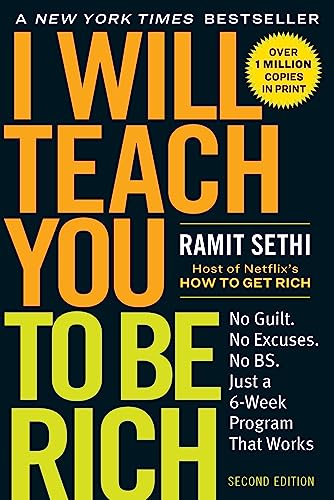
5Ramit Sethi · 2009
I Will Teach You to Be Rich
A six-week, automation-first plan for your money.
Sethi's automation-first programme — credit cards, banks, investing, conscious spending — designed to set up your finances once and let them run on autopilot.
- Who should read it
- 20s/30s readers who want to stop optimising lattes and set up their financial system properly.
- Key takeaway
- Automate the boring decisions so you can spend extravagantly on the things you actually love.
Affiliate link — buying through it supports Jarviix at no extra cost to you.
 6
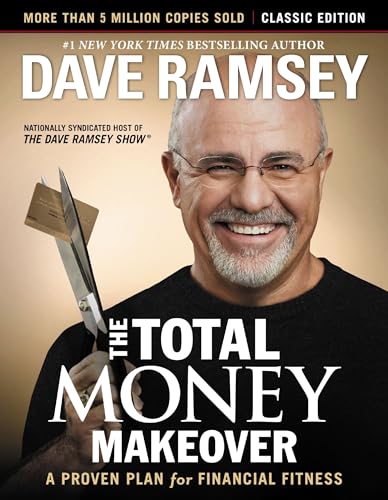
6Dave Ramsey · 2003
The Total Money Makeover
The seven 'baby steps' programme for getting out of debt for good.
Ramsey's no-nonsense plan — emergency fund, debt snowball, fully-funded reserves, retirement and college savings, mortgage payoff — has helped millions of households fix their finances. Opinionated to a fault, which is part of why it works.
- Who should read it
- Anyone with consumer debt who needs an emotional, step-by-step plan to escape it.
- Key takeaway
- Behaviour beats math. Pay your smallest debts first for the win — momentum is what carries you across the finish line.
Affiliate link — buying through it supports Jarviix at no extra cost to you.
 7
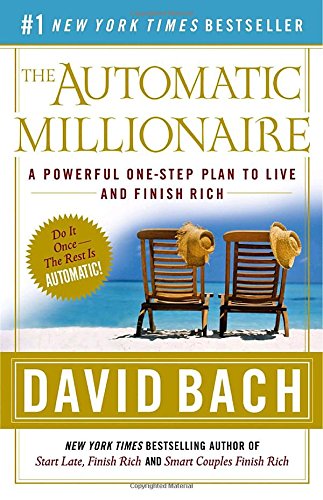
7David Bach · 2003
The Automatic Millionaire
The 'set it once, automate everything' personal-finance plan.
Bach's argument is simple: willpower is unreliable, automation is permanent. Set up payroll deductions, auto-investments and auto-bill-pay and your finances quietly improve in the background for decades.
- Who should read it
- Anyone who keeps 'meaning to' invest more but never quite does.
- Key takeaway
- Pay yourself first — automatically. Discipline is fragile; an automated system is durable.
Affiliate link — buying through it supports Jarviix at no extra cost to you.
 8
8George S. Clason · 1926
The Richest Man in Babylon
Timeless money parables, packaged as a 100-year-old bestseller.
Parables set in ancient Babylon that lay out the foundations of personal finance — pay yourself first, control expenses, multiply gold, guard against loss — in a form that sticks.
- Who should read it
- Anyone who wants the money-mindset basics in an evening of reading.
- Key takeaway
- Pay yourself first. Even 10% saved consistently, before any other expense, quietly outperforms most clever schemes.
Affiliate link — buying through it supports Jarviix at no extra cost to you.
 9
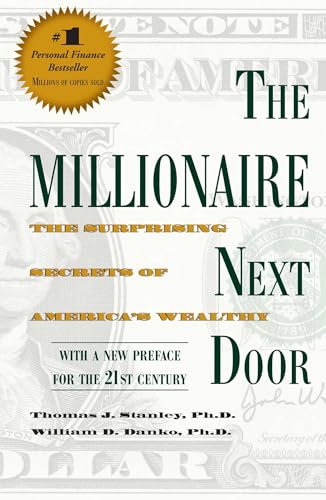
9Thomas J. Stanley, William D. Danko · 1996
The Millionaire Next Door
What 30 years of research revealed about how real millionaires actually live.
A surprising, data-driven portrait of America's wealthy: most aren't doctors or CEOs in mansions — they're frugal small-business owners who quietly under-spend their income for decades. Demolishes the lifestyle-driven definition of wealth.
- Who should read it
- Anyone who suspects spending their next pay raise won't make them feel wealthier — and is right.
- Key takeaway
- Wealth is what you don't spend. Income is a river; net worth is the lake — only one of them lasts.
Affiliate link — buying through it supports Jarviix at no extra cost to you.
 10
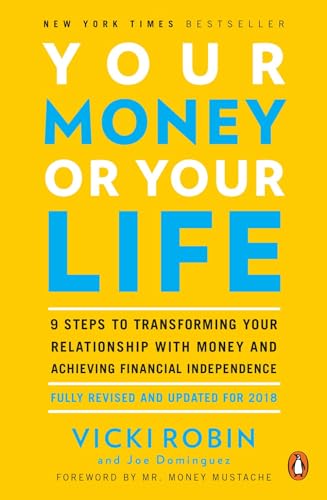
10Vicki Robin, Joe Dominguez · 1992
Your Money or Your Life
The mindset book behind much of modern FIRE.
Reframes money as life energy — hours of your life traded for spending — and walks through a 9-step program to align spending, saving and work with what you actually value.
- Who should read it
- Anyone questioning the work-spend cycle, or planning toward financial independence.
- Key takeaway
- Every purchase has a hidden price tag in hours of your life — most spending decisions look different in that currency.
Affiliate link — buying through it supports Jarviix at no extra cost to you.
 11
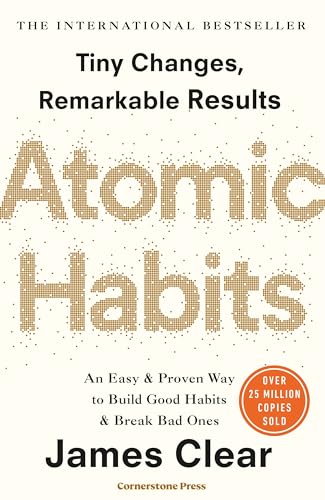
11James Clear · 2018
Atomic Habits
A behavioural-science framework for tiny, compounding habits.
Clear distils the habit-formation literature into a four-part framework — cue, craving, response, reward — and shows how 1% improvements compound into outsized long-term outcomes. Reads like a personal-finance book even when it isn't.
- Who should read it
- Anyone trying to build any kind of long-term habit — saving, investing, learning, training.
- Key takeaway
- Don't focus on goals — focus on systems. Identity-level habits compound far longer than motivation does.
Affiliate link — buying through it supports Jarviix at no extra cost to you.
 12
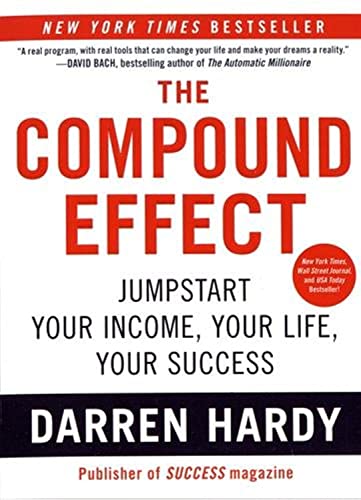
12Darren Hardy · 2010
The Compound Effect
Small choices, repeated over years, build outsized outcomes.
Hardy's short, motivational treatment of how everyday decisions in money, health and relationships compound — for or against you — over decades. Closer to a habit book than a money book, but applies cleanly to both.
- Who should read it
- Readers who find Atomic Habits too long and want a faster motivational push.
- Key takeaway
- Tiny daily disciplines look pointless on day one and unstoppable on day 1,000 — both are true.
Affiliate link — buying through it supports Jarviix at no extra cost to you.
 13
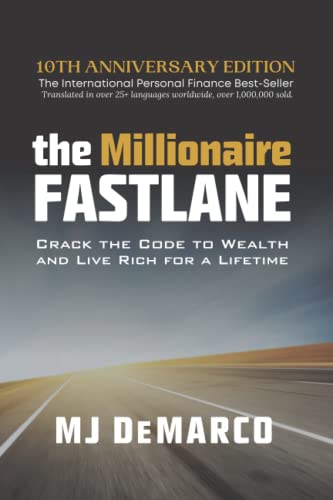
13MJ DeMarco · 2011
The Millionaire Fastlane
An aggressive case for building businesses instead of slow-saving your way out.
DeMarco rejects the 'work 40 years and retire' script and argues for time-leveraged business systems as the realistic path to wealth in your 30s, not your 70s. Polarising but useful as a counterweight to FIRE orthodoxy.
- Who should read it
- Entrepreneurial readers who find traditional 'save more, retire later' advice depressingly slow.
- Key takeaway
- Wealth is built by separating your income from your hours — own systems that scale without you in them.
Affiliate link — buying through it supports Jarviix at no extra cost to you.
 14
14Robert T. Kiyosaki · 1998
Rich Dad's Cashflow Quadrant
The four ways people make money — and which actually scale.
Kiyosaki's follow-up to Rich Dad Poor Dad maps everyone into one of four quadrants: Employee, Self-employed, Business owner, Investor — and argues for moving rightward over time.
- Who should read it
- Salaried readers wondering why their income tops out and capital builders' doesn't.
- Key takeaway
- The right side of the quadrant (B and I) earns when you're not working — the left side (E and S) doesn't.
Affiliate link — buying through it supports Jarviix at no extra cost to you.
 15
15Napoleon Hill · 1937
Think and Grow Rich
The 1937 self-help classic that started the entire genre.
Hill's depression-era distillation of his interviews with industrialists like Carnegie and Edison. Dated in places, but its core ideas — desire, plans, persistence, mastermind — appear unchanged in every modern productivity book.
- Who should read it
- Readers curious about the source material that influenced everything from Tony Robbins to Naval.
- Key takeaway
- Specific desire + a written plan + persistence outperform talent in almost every domain. Most people skip step two.
Affiliate link — buying through it supports Jarviix at no extra cost to you.
 16
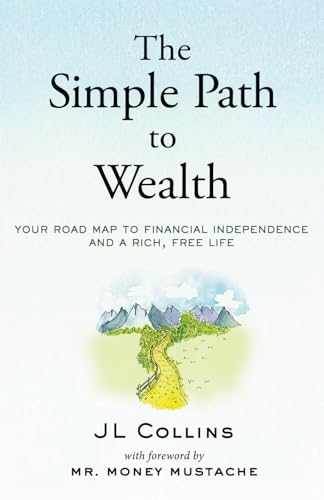
16JL Collins · 2016
The Simple Path to Wealth
The 'just buy index funds' book, written as letters to a daughter.
Collins' compilation of his famous 'stock series' — a calm, opinionated argument for f-you money, simple low-cost index investing and ignoring the noise. Every investing principle in one short, readable book.
- Who should read it
- Any new investor who wants a complete plan in one weekend of reading.
- Key takeaway
- Spend less than you earn, invest the surplus in low-cost broad-market index funds, avoid debt — and otherwise leave it alone.
Affiliate link — buying through it supports Jarviix at no extra cost to you.
Pair the books with the work
Long-form personal-finance writing, calculators and India-specific guides — the perfect companion to the books above.
More reading lists
Finance · Books
27 curated picks

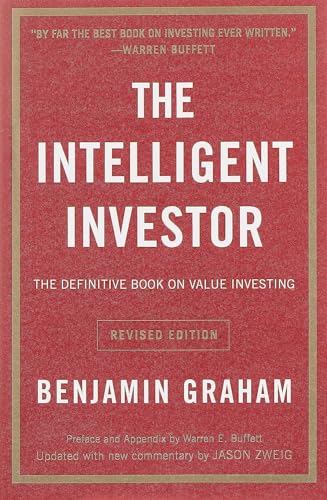
Best Investing Books for Beginners and Long-Term Investors
A curated reading list of the best investing books for beginners and long-term investors — Graham, Bogle, Lynch, Housel and more, with clear takeaways for each.
Open reading listFinance · Books
24 curated picks

Best Trading Books for Beginners and Serious Traders
The best trading books to learn risk management, market psychology, technical analysis and options — chosen for traders who actually want to survive their first five years.
Open reading listTech · Books
10 curated picks

Best System Design Books for Backend Engineers
The system-design books we recommend to backend engineers and interview candidates — DDIA, Building Microservices, Database Internals, SRE, and more.
Open reading list